Malta with kids: how to combine playgrounds, walks and parents' downtime
A family day in Malta is easier to plan not around a list of attractions, but around two things: when it is comfortable for the child to be outside, and where you can take a proper break. The heat, the stone-heavy urban layout and short trips between districts wear you down quickly if you try to "fit everything in". A workable routine is simple: one main walk in the morning, a rest during the day and a short outing in the evening.
Pick one area per day
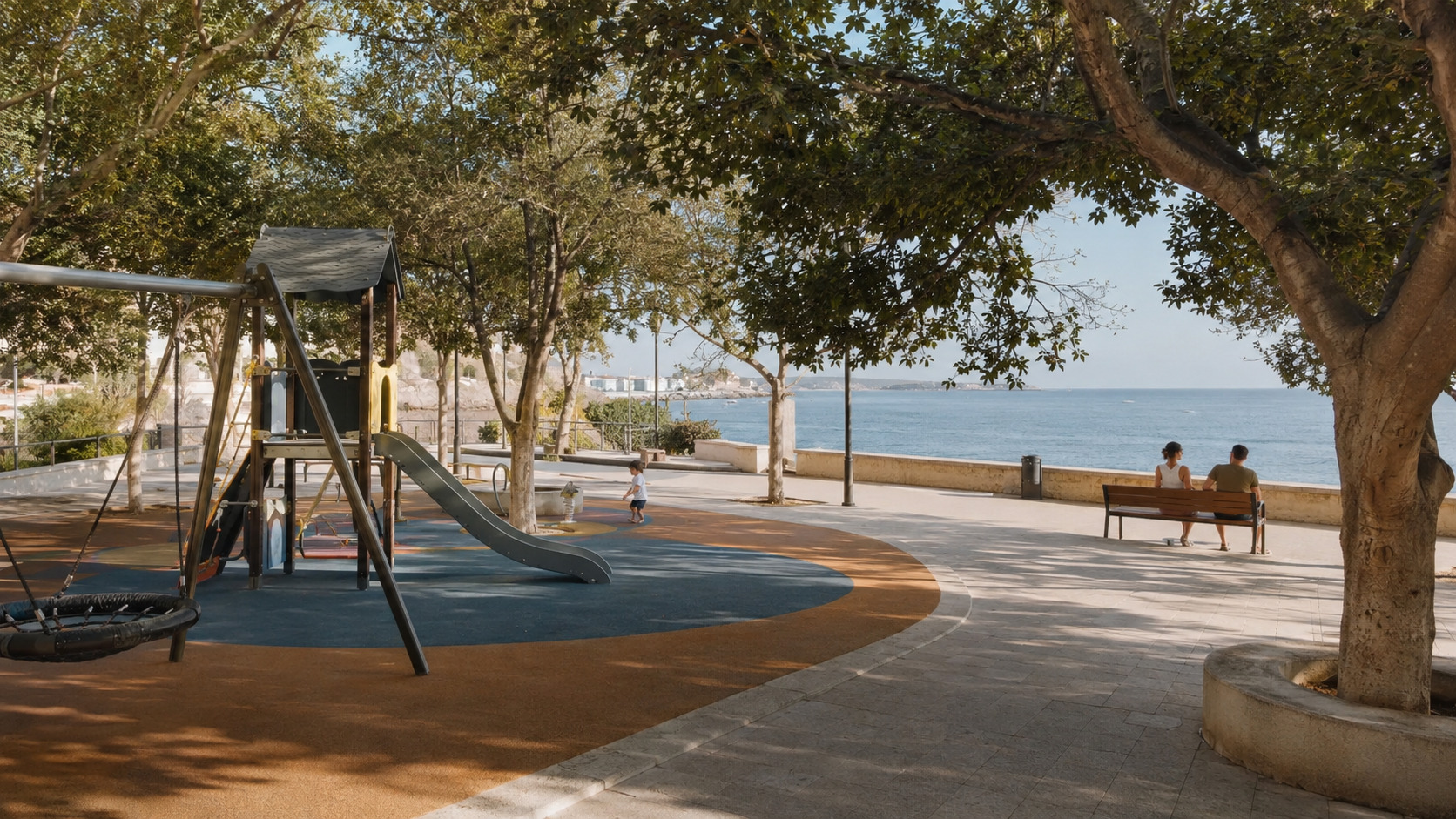
Don't try to combine a distant beach, a museum in Valletta and a playground on the other side of the island in one route. It is better to pick a single area that has at least two of the following three points: a promenade for walking, a park or play zone, and a café or shop for water. Then, after the play, you won't have to put the child back in the car just to get lunch, and adults will find it easier to adjust the plan on the go.
Before heading out, check the practical details:
- whether the playground is shaded during your actual walking hours;
- whether it is stroller-accessible without long staircases and steep descents;
- where the toilets, water and a quiet snack spot are located;
- whether there is open space nearby so you don't have to walk along a busy road after play;
- how long the way back will actually take if the child falls asleep earlier than usual.
Such a checklist is more useful than a "top places" ranking: it removes in advance the reasons a good walk turns into a rush.
Split the day into three clear parts
The morning is best kept for the playground, the sea or a walking route: at that time it is easier to be under the open sun and to find a free bench in the shade. By midday it is worth moving on to lunch and heading back to your accommodation. A daytime nap — or at least a quiet hour in the cool — is not wasted time, but a way to save energy for the evening. After 5–6 p.m. you can pick a short promenade, a park, ice cream or dinner within walking distance.
Consider transport separately when you split the day. Malta looks small on the map, but buses run on their own rhythm, and a taxi ride between areas at midday can turn a short trip into a long one because of narrow streets and parked cars. If the child does not tolerate long rides, it is worth choosing a base within walking distance of at least one playground and one shop. Then even a delayed bus or a sudden change of plan does not break the day.
| Part of the day | What to plan | What to avoid |
|---|---|---|
| Morning | Playground, walk near the water, a short drive | Several points in different towns |
| Midday | Lunch, rest, quiet indoor activities | Long queues and open exposed routes |
| Evening | One short outing close to your accommodation | "Just-in-case" backup programmes |
If you want to visit another town, set aside a separate day for it. That way, the closest playground or a walk near your accommodation stays a backup option, not a cancelled item on the programme.
Leave the evening free — it is part of the route too
After an active morning, the child usually needs a calm evening, and parents need the freedom not to invent yet another compulsory activity. That is why, when booking accommodation, it is worth checking in advance what lies within a five- to ten-minute walk: a quiet café, a shop, a promenade, a small park. That radius matters more than the total number of places around the hotel.
Along with location, small details of the room itself affect how long the evening lasts. If the child usually falls asleep to a fan, keep that habit on holiday — an unfamiliar bedroom is stressful enough without changing the sleep routine. Blackout curtains or thick blinds, a bedside lamp instead of the ceiling light, no noisy street under the window — all of it means the child settles faster, and adults actually get an hour or two to themselves rather than another shift of putting the child back to bed.
Build the route around a single trio
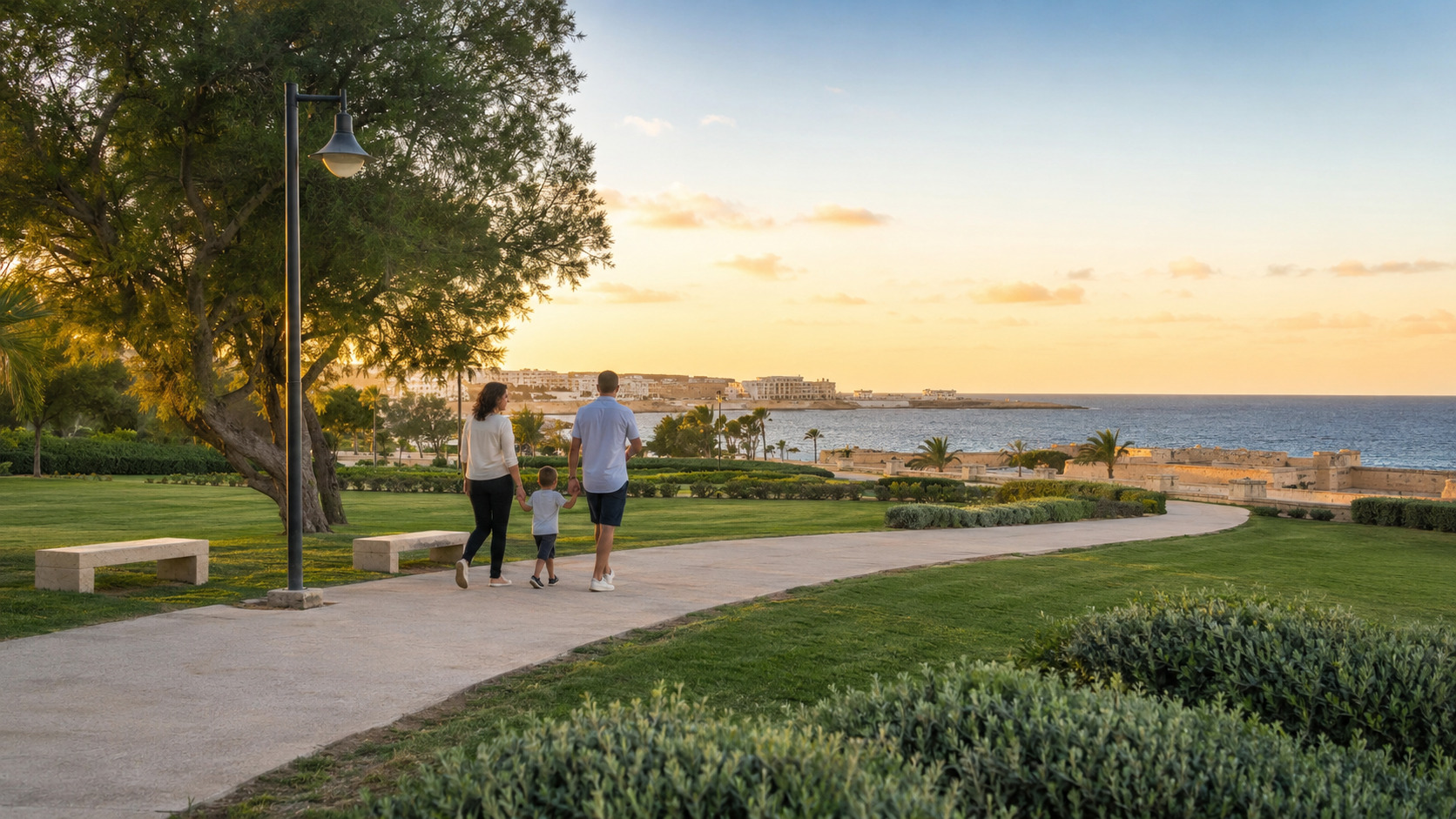
The most convenient combination for a day with a child is a playground, a short walk and food nearby. The playground lets the child move actively, a promenade or park changes the setting, and a café closes the route without having to talk them through "just ten more minutes". It is important not to lock these points into a strict order: if the child gets absorbed in play, the walk can be cut short; if they get tired earlier, move straight on to food.
What to bring so you don't have to hunt for it on the spot
On the island, small inconveniences feel stronger when the sun is already high and the nearest shop is not on your way. Into a light bag it is worth putting water, hats, wet wipes, a small snack, a spare T-shirt for the child and a thin layer of clothing for air-conditioned indoor spaces. For the stroller you'll need a sun shade, but not a thick cover: it worsens air circulation.
A good family route in Malta is not the one with the most spots ticked off. It leaves the child time to play, gives adults a chance to rest, and gives the whole family a buffer against the heat, tiredness and spontaneous changes of plan.