Best Sandy Beaches in Malta for Kids: Where the Water Is Shallow and the Sand Is Real
Sandy beaches on Malta are scarce — the coastline is mostly rocky limestone, and what looks like a beach on Instagram can turn out to be a concrete slab with a ladder into deep water. For families with small children, this matters: a toddler needs sand to dig in and a gentle slope to wade safely. The good news is that the sandy beaches Malta does have are genuinely excellent for kids, with shallow water stretching far from the shore and lifeguards on duty in summer. Below — five beaches that actually have sand, shallow water and the infrastructure a family needs, checked against current conditions and real parent feedback.
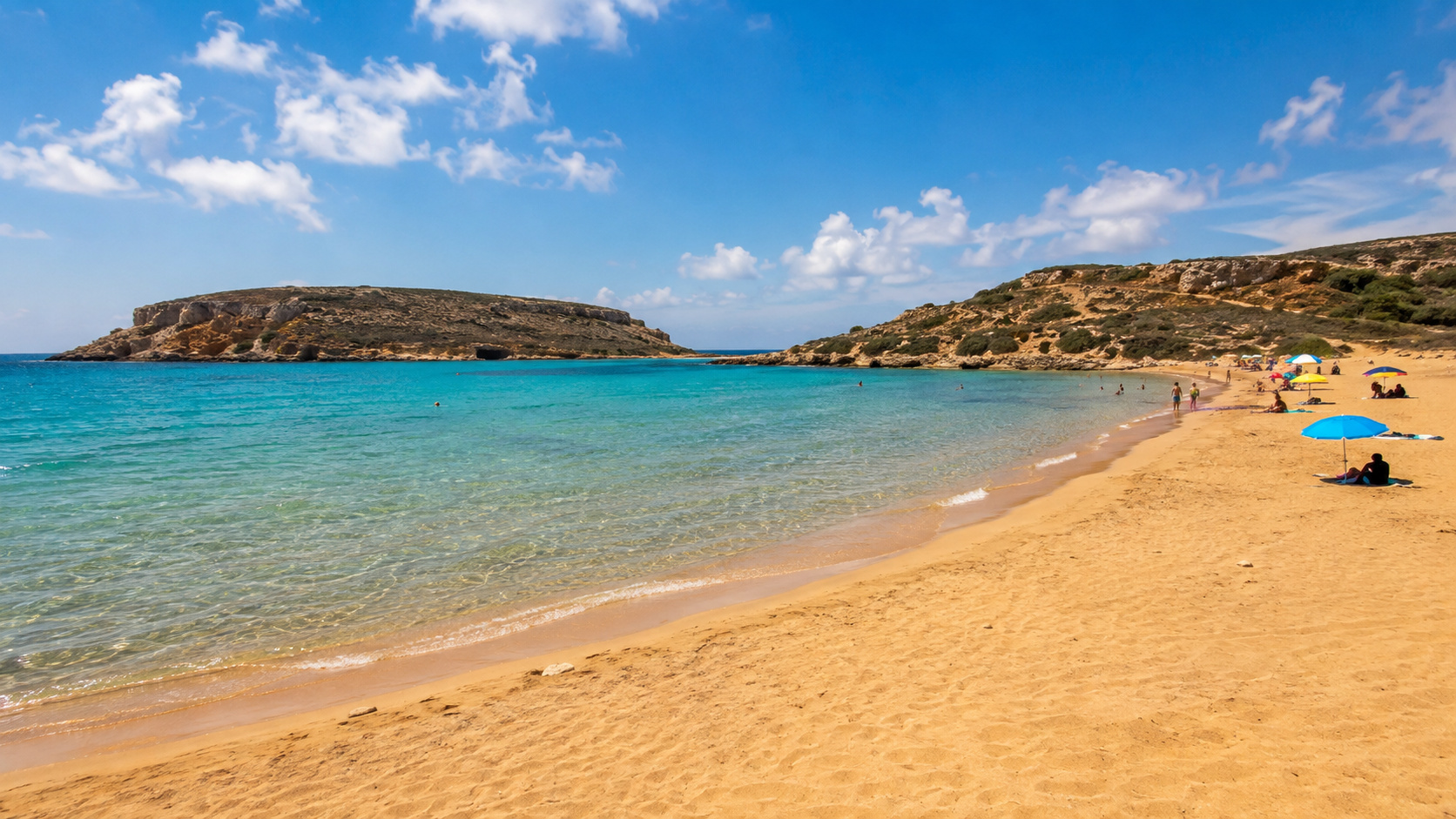
What makes a beach family-friendly on Malta
Not every sandy beach is automatically good for children. On a small island with strong currents, sharp rocks just below the waterline and a summer UV index that regularly hits 10+, the checklist is more specific than "has sand". A family-friendly beach on Malta needs a gradual entry into the sea — ideally shallow enough for a three-year-old to stand 20 metres out — and it needs to be sheltered enough that waves do not knock small children over on a windy day. After that come the practical things: lifeguards (present on all major beaches from June to September), toilets, fresh water for rinsing off salt, and somewhere to buy a drink without packing up and walking half a kilometre.
Accessibility matters too. Some of Malta's most beautiful bays — Għajn Tuffieħa, for example — sit at the bottom of 200 stone steps, which rules them out for anyone with a pushchair or a toddler who has just learned to walk. The beaches below are all reachable by car and by public bus, and none of them require mountaineering to get to the sand.
Mellieħa Bay (Għadira): the obvious first choice
Mellieħa Bay is Malta's largest sandy beach — nearly 800 metres of fine golden sand along the northern coast — and the single best option for families with small children on the entire island. The reason is the slope: you can wade out 20–30 metres from the shore and still be only knee-deep. For toddlers, this is as close to a paddling pool as the open sea gets. The bay is sheltered between two headlands, which keeps the water calmer than on the west coast even when the wind picks up.
The beach holds Blue Flag status and the facilities reflect it: lifeguards in summer, public toilets and showers, sunbed and umbrella rental, snack kiosks, and several restaurants along the road above. There is also a seasonal floating water park offshore (Summer Fun Water Park) for older children, roughly ages 6 and up. Popeye Village, the film set turned theme park, is a ten-minute drive away and makes a natural afternoon add-on if the beach alone is not enough.
The downside is popularity. In July and August Mellieħa Bay gets extremely crowded — by mid-morning it can be hard to find a free patch of sand, and parking fills up fast. The strategy that works for locals: arrive before 9:00, set up close to the water on the left (southern) end of the beach where it is slightly less packed, and leave by early afternoon. Buses 41, 42, 221, 222, 101 and X1 all stop nearby.
Golden Bay: the sunset beach
Golden Bay sits on the northwest coast, framed by low cliffs and backed by the Radisson Blu Resort. It is one of Malta's most photographed beaches and one of the few that face due west, which means sunsets here are spectacular — and for families, a late-afternoon visit in summer doubles as both beach time and the best free show on the island.
The sand is soft and golden, the water is clear, and the entry is gentle enough for children, though it gets deeper faster than at Mellieħa. Blue Flag certified, with lifeguards, sunbed rental, toilets, a beach restaurant and a couple of kiosks. The beach has a good bus connection — routes 223 and 225 run from various parts of the island — and a large car park above the sand, though it fills up by midday in season.
Two things to know: Golden Bay draws a younger, louder crowd than Mellieħa, especially on weekend evenings when locals come for barbecues, and the water is not always as clean as at other beaches on the island. It is a great beach, but if your priority is the calmest, shallowest water for very small children, Mellieħa is the safer bet. If the children are older and you want scenery and atmosphere, Golden Bay wins.
Pretty Bay, Birżebbuġa: the south's best-kept family secret
Pretty Bay is the only large sandy beach in the south of Malta, right in the centre of the small town of Birżebbuġa. The sand is fine, the water is shallow and almost wave-free, and the entry is extremely gentle — on the left (southern) side of the beach there is a small cove that is particularly sheltered, where even the smallest children splash safely. Lifeguards are on duty in summer, and sunbed-and-umbrella sets are among the cheapest on the island — around €10 for two beds and a parasol.
The promenade behind the beach is lined with cafés, restaurants, snack bars and — importantly for families — a children's playground directly adjacent to the sand. There are showers for rinsing off salt water, and the bus stop is right at the beach (routes 82, X4, 119 from Valletta and the airport). The nearby Playmobil FunPark, a factory tour and play centre, makes a natural combo for a rainy-day backup or an afternoon extension.
Now, the catch — and it is a big one visually. Directly across the bay sits Malta Freeport, one of the Mediterranean's major container ports. Cranes, container ships, and an industrial skyline dominate the view. This is divisive: some families do not mind (children, in fact, often find the ships fascinating), others find it ruins the atmosphere. The water quality itself is fine, but the aesthetic is far from a postcard. If the view matters more than the practicalities, skip Pretty Bay. If you want calm water, cheap sunbeds, a playground, and a beach that local families actually use daily — it is hard to beat.
Paradise Bay: small, calm, and close to the Gozo ferry
Paradise Bay is a compact sandy cove at the far northern tip of Malta, a few hundred metres from the Ċirkewwa ferry terminal where boats depart for Gozo. The beach is small — it fills up fast in summer — but the water is exceptionally clear, calm, and shallow enough for children. The setting is more sheltered than Golden Bay or Mellieħa, tucked into a natural inlet between low cliffs.
Facilities are basic but sufficient: a small snack bar, sunbed rental, and toilets. There is no lifeguard tower at all times, though seasonal coverage exists. The car park is above the beach, and a set of steps leads down (not pushchair-friendly, so plan accordingly). The beach works best as a stop before or after the Gozo ferry — an hour or two of swimming while waiting for a crossing, rather than a full-day destination. If you are driving to Mellieħa anyway, it is a 15-minute detour and worth checking whether the beach is full before committing.
Ramla Bay, Gozo: the red-sand beach
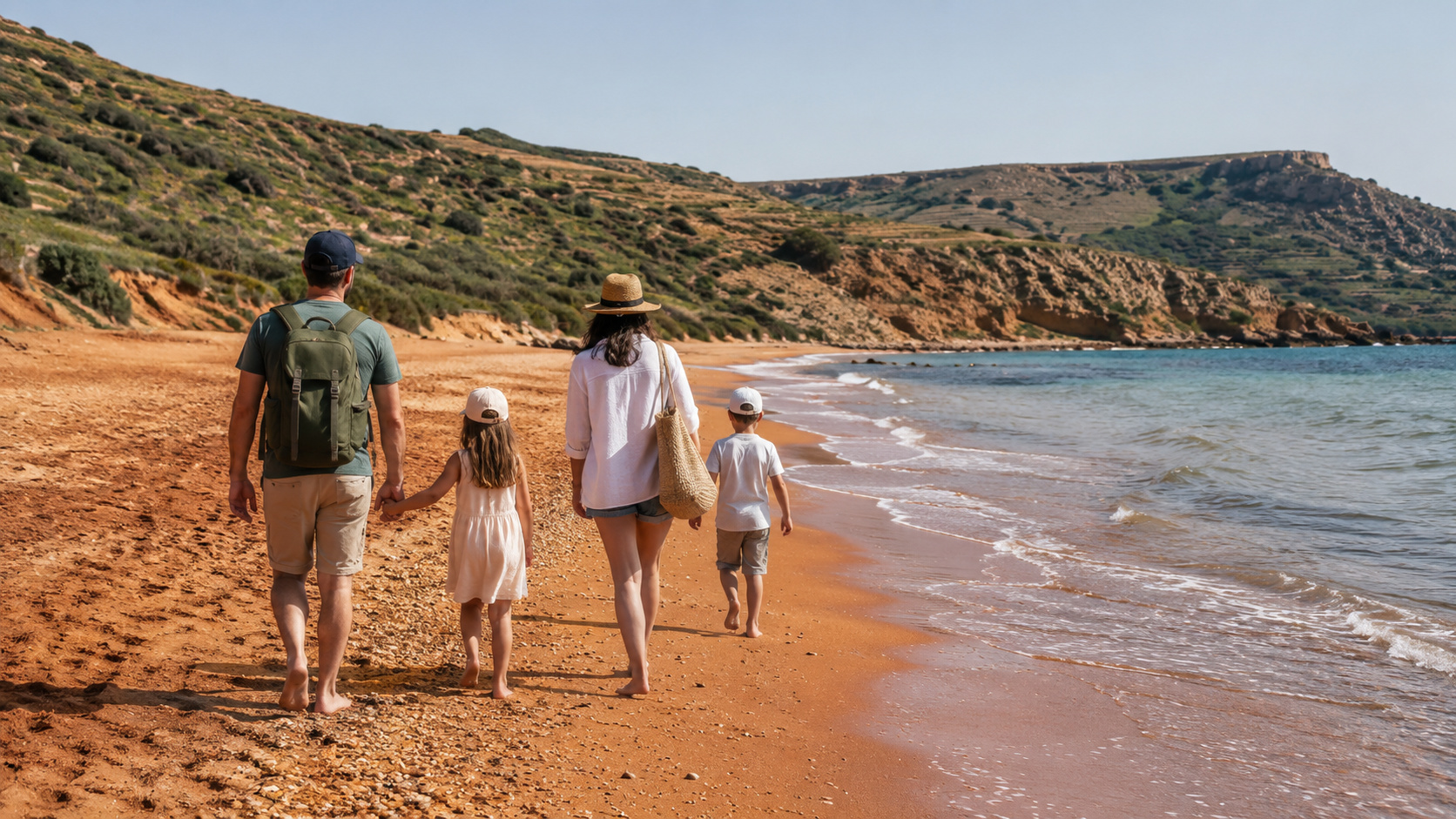
Ramla Bay is Gozo's largest sandy beach and one of the most distinctive in the entire Maltese archipelago. The sand is a vivid reddish-gold — the colour comes from iron oxide in the local clay — and the bay is wide, backed by low dunes and green hills rather than hotels. The water slopes gently, making it excellent for families, and the beach holds Blue Flag status with seasonal lifeguards.
Facilities are deliberately low-key: a couple of seasonal kiosks selling drinks and snacks, sunbed rental, and not much else. There are no big restaurants on the beach itself, and the nearest village (Nadur) is a short drive away. That is part of the appeal — Ramla feels more natural and less developed than any sandy beach on the main island. For children, the combination of unusual sand colour, shallow water and open space to run is hard to match.
Getting there requires the Gozo ferry from Ċirkewwa (around 25 minutes) and then a drive or bus ride to the beach. It is not a quick pop-in, but if you are spending a day on Gozo anyway, Ramla should be the beach stop. The bay faces northeast, so it catches the morning sun beautifully and stays sheltered from the prevailing northwest wind.
At a glance: which beach for which family
Every beach has a trade-off, and what works depends on the age of the children, whether you have a car, and how much the view matters relative to the water. Here is a quick comparison:
| Beach | Best for | Depth / entry | Crowds | Transport |
|---|---|---|---|---|
| Mellieħa Bay | Toddlers, first-timers | Very shallow, 20–30 m out | Heavy in summer | Buses 41, 42, X1 + parking |
| Golden Bay | Older kids, sunsets | Gentle but deeper | Heavy, younger crowd | Buses 223, 225 + parking |
| Pretty Bay | All ages, budget | Very shallow, calm | Moderate, mostly locals | Buses 82, X4 + parking |
| Paradise Bay | Quick swim, Gozo ferry combo | Shallow, calm cove | Fills fast (small beach) | Car recommended |
| Ramla Bay (Gozo) | Day trip, unusual sand | Gentle slope | Moderate | Ferry + car or bus |
If you have one beach day and small children — go to Mellieħa, arrive early, leave after lunch. If you have two days, add Pretty Bay for a completely different feel (south, local, industrial view but perfect water). If you are on Gozo — Ramla, no question. Golden Bay and Paradise Bay are best as afternoon or half-day additions rather than full-day commitments with toddlers.
Practical notes for beach days with kids
A few things that are specific to Malta and not obvious from guidebooks:
- Sunbed prices vary wildly. Mellieħa and Golden Bay charge €8–15 per set; Pretty Bay is cheaper (around €10 for two beds and umbrella). Kiosks rarely take cards — bring cash.
- Lifeguards are on duty on major beaches roughly from June to September. Outside that window you are on your own, though the water is often calmer in the shoulder season.
- The sand gets scorching by midday in summer. Water shoes help on the walk from the towel to the waterline, and a simple beach tent or umbrella is almost mandatory for children under five.
- Parking at Mellieħa and Golden Bay fills up by 10:00–10:30 in July and August. Either arrive early or take the bus — the stops are close to the sand at both beaches.
- Wind direction matters. A strong northwest wind (majjistral) makes Golden Bay and Għajn Tuffieħa rough; on those days head to Mellieħa or Pretty Bay, which are more sheltered. A northeast wind (grigal) does the opposite — Mellieħa gets choppier, while the west coast stays calm.
Checking the wind forecast the evening before is the single most useful habit for beach days with children on Malta. The Maltese meteorological service and Windy.com both give reliable coastal forecasts, and ten minutes of checking saves you from arriving at a beach where the red flag is already flying.
A note for families who have not been before
Malta has fewer sandy beaches than most Mediterranean islands, and none of them are long empty stretches — they are compact, they get busy, and in summer the logistics (parking, shade, timing) matter more than the destination itself. But the water quality is excellent, the season runs from May well into November, and the beaches that do have sand are genuinely good for children. Pick one per day, arrive early, leave before the heat peaks, and the rest of the island — playgrounds, parks, villages, ice cream — fills in the gaps naturally.